How New Live Casino Games Are Prototyped and Tested
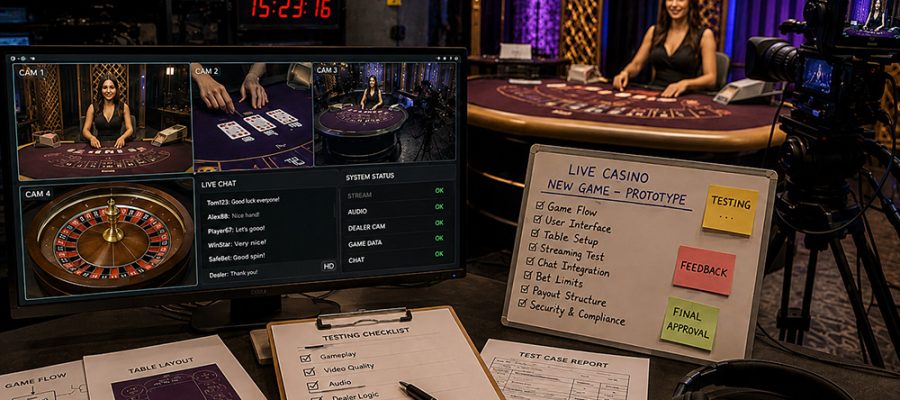
Live dealer games are gaining popularity among the gambling audience due to their real-world experience. You are getting interaction with a human dealer in a professional studio setting similar to a brick-and-mortar one. New dealer games have interactive social engagement through a live chat.
But behind every blackjack, roulette, and poker variant you’d find at a live casino Canada site, there’s a well-thought-out development process. This combines software engineering, game mathematics, studio production, and user testing. The journey from a concept to final game launch is a structured process.
It starts with market research
The first step developers take when ideating a live casino concept is market research. There’s plenty of thought that goes into conceptualising an idea capable of capturing market attention.
Developers review a wide range of established game mechanics, player behaviour, and entertainment trends. Traditional table games are based on a mathematical foundation. However, the new demand is for realism and atmosphere that mimics the brick-and-mortar casino experience.
The human dealer works from a professional studio setting, streamed in HD quality. The visual effects and soundtrack mimic the authentic experience that a standard casino game lacks.
Then comes the social side of a physical casino floor. The chatter and banter between players between hands need reenactment in the live version. That is the function live chat serves. A live chat means players can interact with the dealer and other participants.
Standard casino games rely on a certified Random Number Generator (RNG) to determine outcomes. But the live dealer version is more lifelike. Players watch as the human dealer shuffles cards or spins the roulette wheel.
A live dealer game needs to suit the taste and preferences of its intended audience. That is where format variety matters. Players can choose from live blackjack, roulette, poker, baccarat, and game shows. Furthermore, players are at liberty to choose tables with different bet limits depending on their budget.
This variety is what players ultimately see on the operator side. ToonieBet, for instance, hosts a live dealer lobby within a wider library of over 5,000 casino games, with live tables supplied by studios including Pragmatic Live, Playtech and Yggdrasil.
The last consideration is the stream availability. Studio operations run on rotating dealer shifts, which places continuous demands on streaming infrastructure and uptime engineering. Developers need consistent streaming of the live dealer tables even with low data.
The real work begins
Now, after putting all these factors into consideration and getting approval, the real work of setting a prototype starts. A working model lets the studio see whether the concept holds up outside the design document.
The prototype contains basic graphics, human-dealer interfaces, and simulated game outcomes. It starts with adding simple and easy-to-understand UI/UX designs. This gets added on top of high-end visuals and soundtrack for an authentic experience.
A leaderboard with player rankings and overall performance is added for a competitive environment. Then, there’s the real-time chat function where players can interact with the dealer and other participants.
Payment integration covers e-wallets, bank transfers, and cryptocurrencies. Some developers add multilingual support to cater for audiences in different countries.
Internal testing then covers the game mechanics: game flows, betting windows, payouts, side bets and feature triggers. The testing phase is highly integral to the success of the live casino. Players need to feel that outcomes are organic and not simulated. A roulette wheel spin or card deal must be captured accurately by the player’s screen.
Passing it to third parties
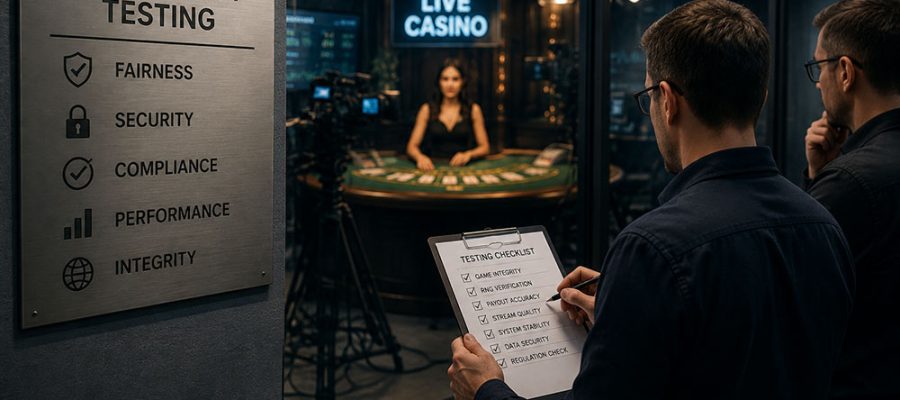
The last hurdle before product launch is going through third-party testing companies like eCOGRA or iTech Labs. These companies apply defined test procedures to confirm the game meets the regulator’s standards.
Live dealer games are tested from design to software. There’s remote testing of the player interface alongside an on-site inspection of the studio. Another critical step is the stress test, where it’s determined how the game behaves with multiple players on board.
Testers run multiple bets from different tables on different devices to identify any inconsistency in how the game behaves. Lag and latency issues are recorded in the test report. The payment processing is tested for any delays or failed transactions.
Stream quality and video feed consistency are assessed separately. The exact moments results are picked by a human dealer should correspond with the results displayed on the player’s screen.
The final testing report contains the test house details, results, game details, and certificate reference.
Key Takeaway
A live casino game appearing on a licensed online casino is a result of rigorous tests by the developer and third-party partners. It means the game has passed those checks and meets the compliance standards set by the regulator. In Ontario, that regulator is the Alcohol and Gaming Commission of Ontario, which requires certification by an accredited testing laboratory before a game reaches players. Access to the regulated market is restricted to those aged 19 and over, and anyone who feels their play is no longer under control can contact ConnexOntario, which runs a free 24/7 helpline.